Heat Press Machine Explained: A UK Buyer's Guide
Key Takeaways
- Precision is paramount: A reliable heat press machine depends on the right balance of pressure, temperature and timing.
- Hydraulic advantage: For extraction and specialised DIY pressing, up to 14,000psi of hydraulic force can deliver more consistent results than manual lever systems.
- UK safety standards matter: Always check for UKCA or CE marking and follow British electrical safety guidance.
- Versatility: Heat press machines are used for garments, mugs, crafts and specialist high-pressure applications.
TL;DR: A heat press machine is a tool that uses controlled heat, pressure and time to transfer designs or press materials consistently. In the UK, the best choice depends on what you want to make, how much pressure you need, your available space and whether the machine meets UKCA or CE safety requirements.
A heat press machine is used to apply steady heat and pressure for a set time, usually for printing onto garments and blanks or for specialist pressing applications. If you are choosing one in the UK, look first at plate size, pressure type, temperature accuracy, ease of use and safety compliance. Based on our testing and product experience at Rosiva, consistent heat distribution and repeatable pressure matter far more than headline wattage alone.
The UK’s maker economy has grown steadily in recent years. As a result, more British hobbyists, side hustlers and small brands are using heat press machines for T-shirts, mugs, labels and other custom products. However, choosing the right machine involves more than picking the cheapest option online; you also need to understand force, heat distribution and mechanical reliability.
At Rosiva, we specialise in the intersection of high-pressure hydraulics and digital heat control. Therefore, understanding how pressure systems work alongside accurate heating is essential if you want cleaner, more repeatable results. This guide explains what a heat press machine is, how it works and what UK buyers should check before purchasing.
What Is a Heat Press Machine?
A heat press machine is a device that applies controlled heat and pressure to a material for a specific amount of time. Most commonly, it is used to transfer designs onto fabric, such as T-shirts, hoodies and tote bags. However, some specialist machines are also used for pressing other materials where even pressure and accurate temperature are essential.
Unlike a domestic iron, a dedicated heat press machine maintains more consistent temperature across the platen and applies pressure more evenly. Consequently, you get cleaner transfers, fewer hot spots and more repeatable results. For those looking at wider equipment sourcing options, our ultimate guide to AliExpress in the UK explains importing logistics, although buying from UK stockists often gives better after-sales support and warranty protection.
How Does a Heat Press Machine Work?
A heat press machine works by combining three variables: temperature, pressure and dwell time. First, the plates or heating element warm up to the desired setting. Next, the material is positioned correctly. Then the machine applies firm pressure for a fixed period so that the transfer or pressing process can happen evenly.
In practice, all three variables must work together. If the temperature is too low, the transfer may not bond properly. On the other hand, too much heat can scorch fabrics or damage substrates. Similarly, poor pressure can lead to patchy results even if your temperature setting is correct.
Why Do Pressure, Temperature and Time Matter?
The quality of any result comes down to consistency. Based on our testing with digital control systems and hydraulic setups, uneven pressure or fluctuating plate temperatures are among the most common causes of failed pressing jobs. Therefore, buyers should prioritise stable electronics and solid build quality over marketing claims alone.
What Types of Heat Press Machine Are Available in the UK?
The UK market includes several types of heat press machine, each designed for different tasks. So before buying, it helps to match the machine style to your main workload rather than choosing by price alone.
- Clamshell presses: These open upwards like an oyster shell. They save space and suit thinner garments well; however, they can be less convenient with thicker items.
- Swing-away presses: The upper platen swings fully away from the lower platen. As a result, you get clearer access to your workspace and straighter downward pressure.
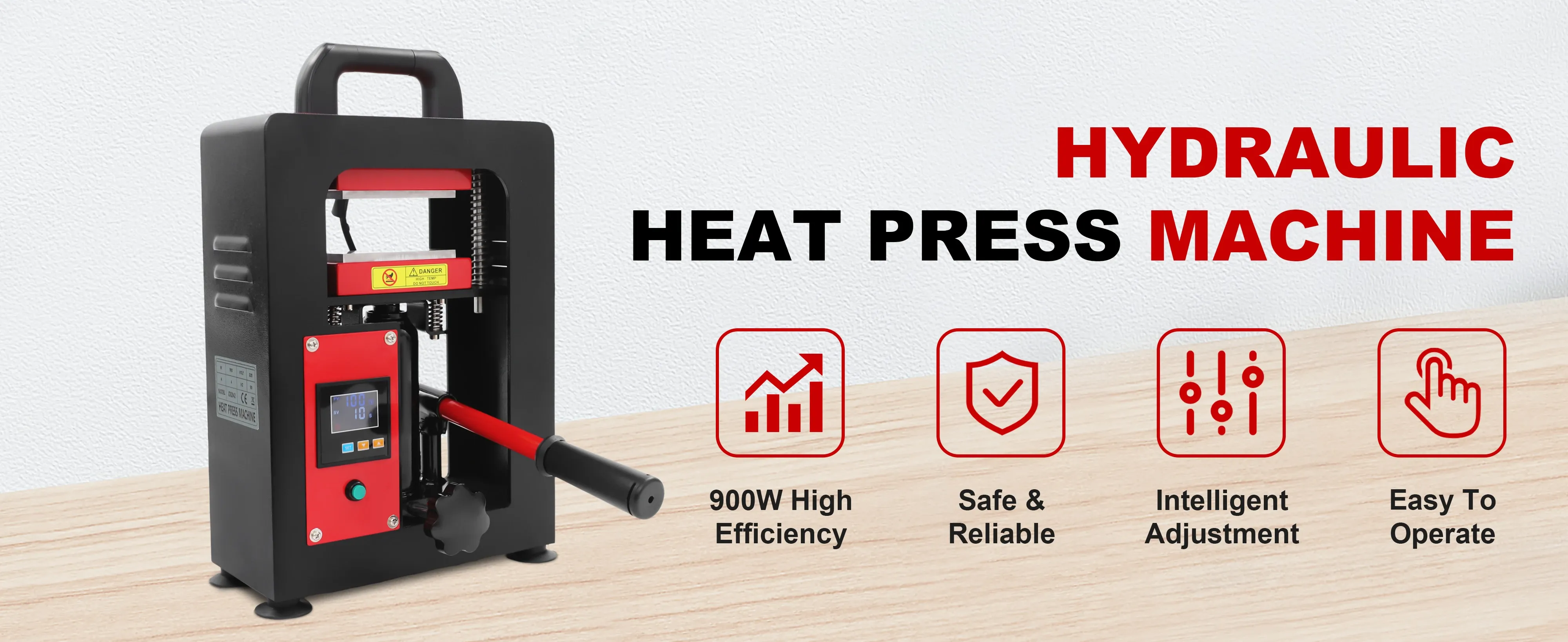
- Hydraulic presses: These heavy-duty machines are designed for users who need high force with minimal manual effort. They are especially useful where repeatable vertical press critical.
- Specialist presses: These include machines made specifically for mugs, caps or plates. For example, see our guide to the Cricut Mug Press.
If your main goal is apparel production rather than specialist pressing force, you may also want to compare options in our guide to choosing a T-shirt printing machine.
Which Heat Press Machine Is Best for Beginners?
For most beginners in the UK, a compact clamshell or entry-level swing-away model is usually the easiest starting point. These machines are simpler to operate for garment transfers and do not require as much setup knowledge as heavy-duty hydraulic units. Nevertheless, if your application depends on precise high force rather than simple apparel printing, a hydraulic model may be worth considering from day one.
The best beginner choice usually has:
- a straightforward digital controller;
- reliable temperature stability;
- a platen size suited to your most common jobs;
- sensible safety features such as overheat protection; and
- UK-based support or warranty cover.
In other words, buy for consistency first and upgrade only when your workload demands it.
Manual vs Hydraulic Heat Press Machine: What Is the Difference?
One of the most important buying decisions is how the machine creates pressure. Manual machines rely on leverage from a handle or closing mechanism. By contrast, hydraulic systems use fluid-powered force to create higher pressure with less physical effort.
Why Choose Hydraulic Pressure?
A manual clamshell or swing-away design may be enough for standard craft work. However, where higher-force precision matters, hydraulic systems offer clear benefits. Based on our testing of high-pressure setups at Rosiva, hydraulic presses produce more repeatable results because they apply force vertically and evenly rather than through an inconsistent hinge action.
What Does 14,000psi Mean in Practice?
In specialist pressing applications, higher available force allows better control over compression without relying on excessive user effort. A hydraulic system using a bottle jack or integrated cylinder can apply substantial pressure smoothly. As a result, users can increase force gradually instead of clamping down suddenly.
ेWhy Is Digital Heat Control Important?
?What features should you look out for when buying one worth looking should?>
Before purchasing any unit , check whether its practical specs match real-world use instead simply its listing headline claims . The strongest options usually combine build quality , accurate controls & sensible safety design .
- < strong >Consistent platen heating : Even surface temperatures reduce patchy transfers & wasted blanks .
- < strong >Adjustable pressure : Useful across different fabric thicknesses , substrates & specialist tasks .
- < strong >Digital timer & controller : Helps reproduce successful settings accurately .
- < strong >Suitable platen size : Buy around your most common jobs rather than occasional edge cases .
- < strong >Stable frame construction : Reduces flex under load & improves long-term reliability .
- < strong >UK plug / voltage compatibility : Essential for safe everyday use in Britain .
- < strong >After-sales support : Spare parts , instructions & warranty service can matter more than saving a little upfront .
Additionally , consider where you'll place it . Swing-away units need clearance around them , while heavier hydraulic models need sturdy benches capable supporting their weight safely .
Are heat press machines safe to use at home in the UK?
Yes — provided they are properly manufactured , correctly installed & used according instructions . Because these machines generate significant heat & draw notable electrical power , safety should always come before price . According to UK workplace guidance such as PUWER principles from Health & Safety Executive references , equipment must be suitable intended purpose & maintained safely . Even if you're using one at home , those principles remain sensible best practice .
"According to UK Health and Safety Executive guidance and established equipment safety principles under PUWER 1998, electrical equipment should be suitable for its intended use, maintained in safe condition, and operated with appropriate precautions."
Look for theUKCA (UK Conformity Assessed) marking , and note that CE marking may still appear on some products depending on market placement rules . You should also check insulation quality , cable condition , fuse rating , clear operating instructions , and secure grounding where applicable . At Rosiva , our machines are designed with practical safety considerations in mind , including grounded components and emergency release valves on hydraulic models . Furthermore , we recommend keeping any unit on a stable non-flammable surface with clear space around it during operation .
How do you use a hydraulic heat press machine at home?
To achieve professional-grade, repeatable results, follow this standard workflow carefully. Although exact settings vary by material, the process below gives a dependable starting point for specialist home pressing .
- < strong >Prepare your material: Ensure everything is correctly positioned using suitable protective paper or accessories where required .
- < strong >Set the temperature: Power on the digital controller . For many specialist tasks, moderate temperatures are often preferred; allow sufficient time for full plate warm-up rather than relying solely on displayed readiness .
- < strong >Pre-press gently: Lightly engage plates first so material warms evenly before full force is applied .
- < strong >Increase pressure gradually: Use steady increments rather than sudden maximum force . This helps produce cleaner outcomes and reduces unnecessary stress on both material & machine frame .
- < strong >Release carefully: Once timing finishes, release pressure slowly and allow handled items to cool appropriately before inspection .
- < strong >Review results: Then adjust one variable at time—temperature, pressure or dwell duration—so future runs remain easy reproduce .
Based on our testing, the most common mistake isn't using too little force; rather, it's changing several settings at once after an imperfect first attempt . A simple logbook of temperatures, times and substrate details makes troubleshooting far easier over time .
Frequently asked questions about heat press machines
Can you use a domestic iron instead of a heat press machine?
You can try, but results are usually far less consistent . An iron does not provide even platen-style pressure or stable edge-to-edge heating , so transfers often fail prematurely or appear patchy .
What size heat press machine do I need?
Choose based on your most common blank size . For example , small logo work needs less space than full-front garment designs . Larger platens offer flexibility , although they also take up more room and may cost more to run .
Does higher price always mean better performance?
Not always . However , better-built machines tend to offer stronger frames , more accurate controllers and improved long-term consistency . Therefore , value should be judged by reliability, support and fit for purpose—not just purchase price alone .
Is buying from a UK supplier better?
Often yes , especially if warranty cover, replacement parts and customer support matter to you . Imported models may cost less initially; however, returns, compliance checks and electrical compatibility can be more complicated .
Final thoughts: how to choose the right heat press machine
The best heat press machine depends on what you plan to make , how often you'll use it ,and how much precision your workflow requires . For straightforward garment decoration , a beginner-friendly clamshell or swing-away model will suit many users . Meanwhile , for specialised high-force applications , a well-built hydraulic unit offers greater consistency with less manual strain .
Ultimately , the right choice comes down to dependable temperature control , even pressure application , solid construction and proper UK safety compliance . At Rosiva , we focus on these fundamentals because they lead to better real-world results—not just better specifications on paper . If you're comparing options in Britain , start there first .
Ready to try Rosiva?
Shop Now — £708.15